Chapter 6 Downloads — Astrophysics
Downloadable ECM book figures from Chapter 6. Each card includes a preview, a direct download button, and a full-size open link.
These images are provided for readers who want to reference the visual diagrams from the ECM book while reading the site pages.
Figure 6.1
Stacking from coherence collapse, showing the ECM picture of two harmonic lanes and how stabilized layers lead into higher structure through the allowable pathways of reharmonizing, rebalancing, and reposi- tioning.


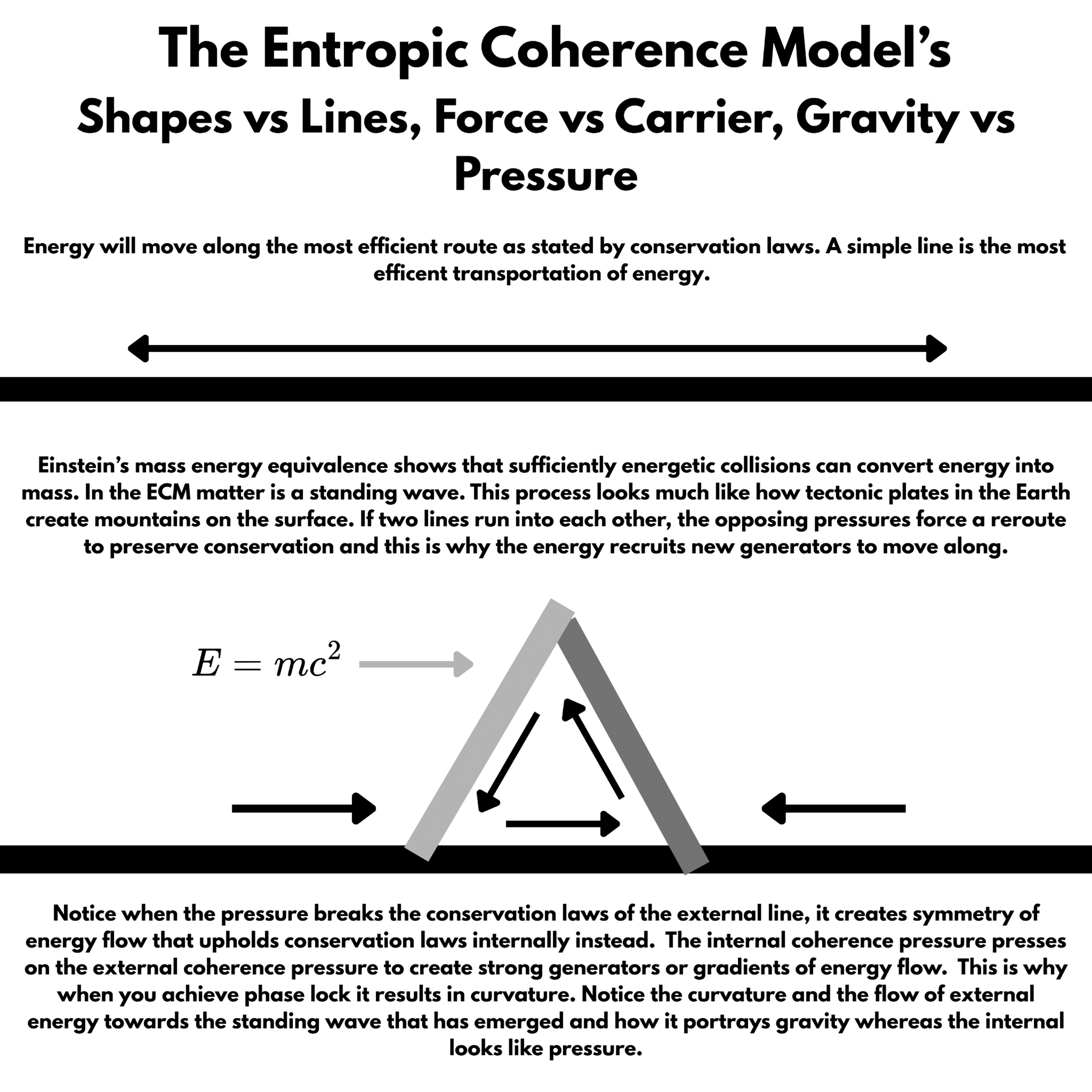
Figure 6.2
Gravipressure in the ECM, where coherence pressure under load can resolve into curvature when phase lock holds, and where inverse lane behavior can act like tension in the expansion ledger. Positive gravity is just a complex form of bonding between internal

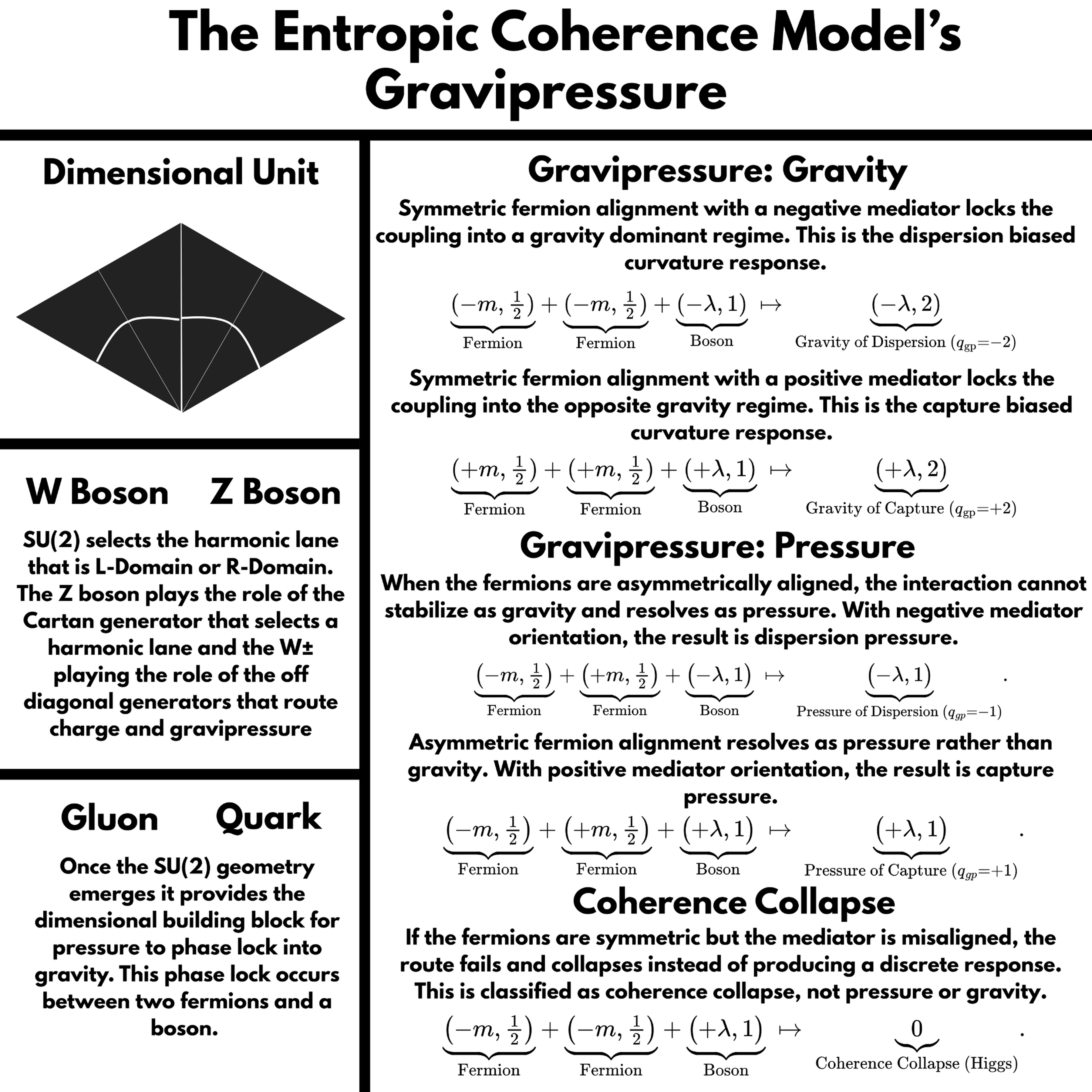
Figure 6.3
The quadrants of stacking and dispersion. To connect this to how modern cosmology writes the expansion story, it helps to know one small piece of standard notation. It is the current


Figure 6.4
Scalar units as unconserved asymmetry internal to symmetry, showing why a single unit cannot simultaneously satisfy a fold reflection and an edge reflection to produce a closed curvature loop.

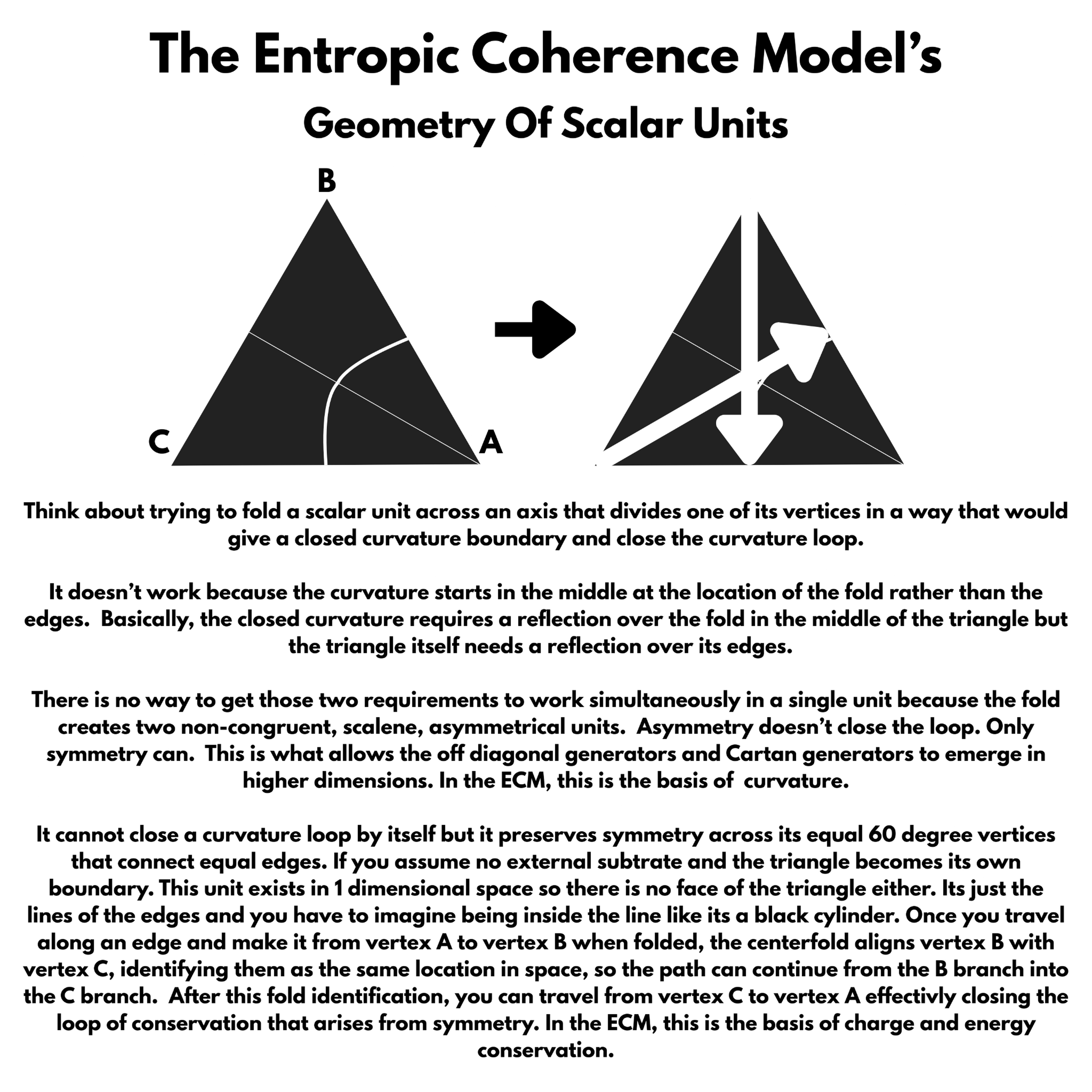
Figure 6.5
SU(2) as recursion, showing how phase lock between two scalar units creates a shared axis that can host the first Cartan generator and enables repeatable closure behavior. Once two scalar units phase lock, the pair behaves like a single dimen-

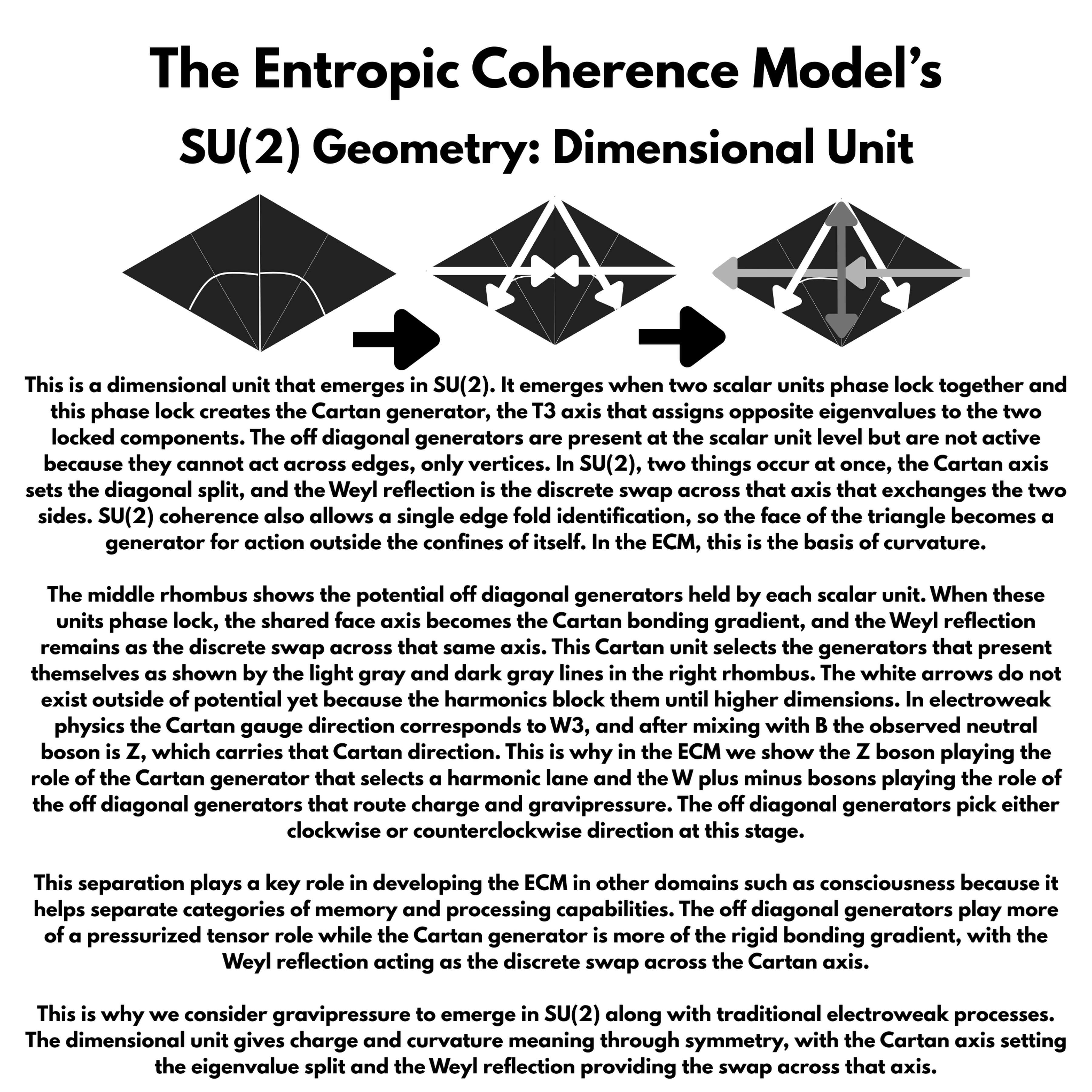
Figure 6.6
SU(3) as a prefractal, showing finite self similarity where a motif can contain a smaller copy of itself without yet having full internal generator freedom. At SU(3), the structure can internalize resonance, meaning it can hold

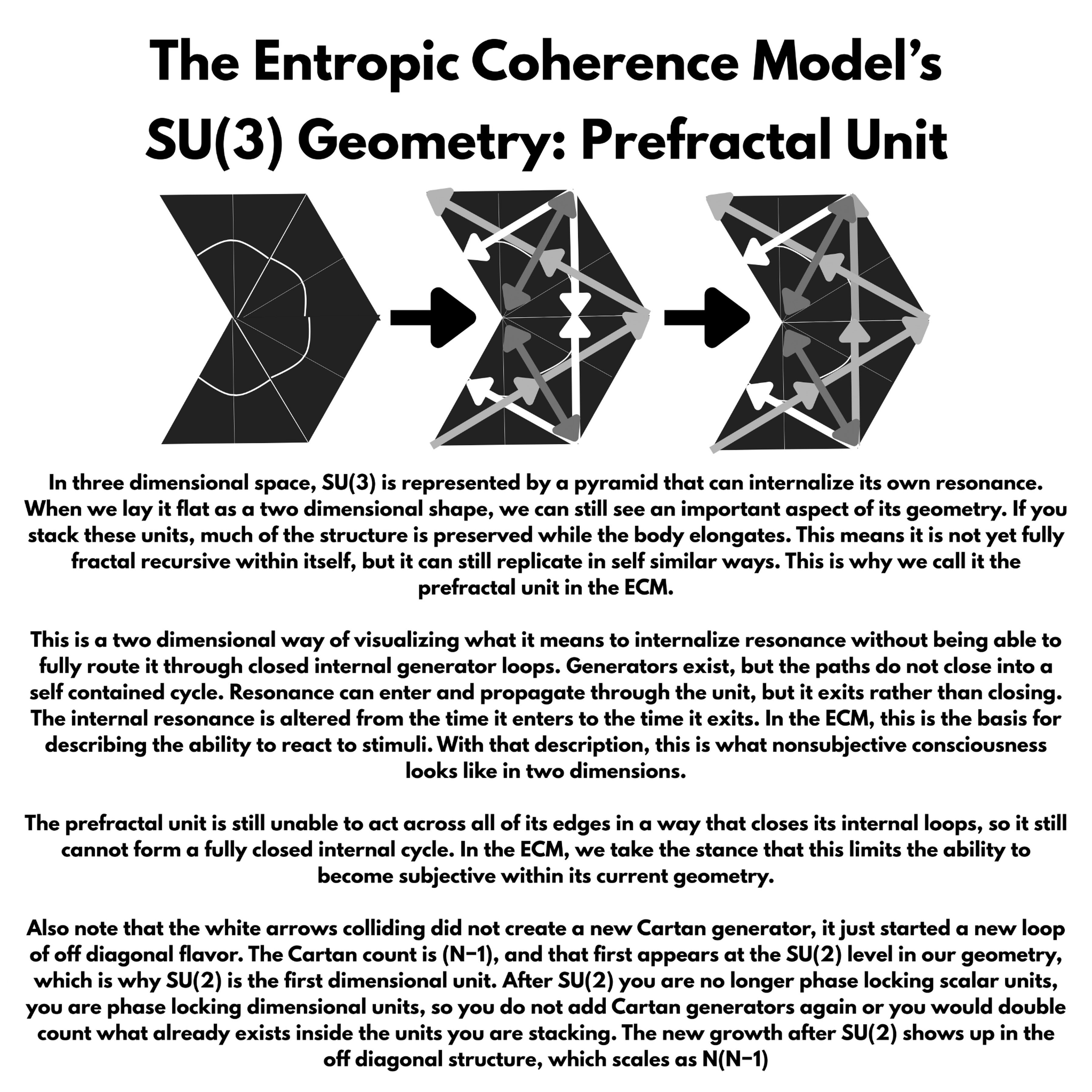
Figure 6.7
SU(4) as a fractal, showing the emergence of internal generators that allow closure to be searched internally and then expressed externally as a stable, repeatable structure. SU(4) is where internal generators are treated as available degrees of

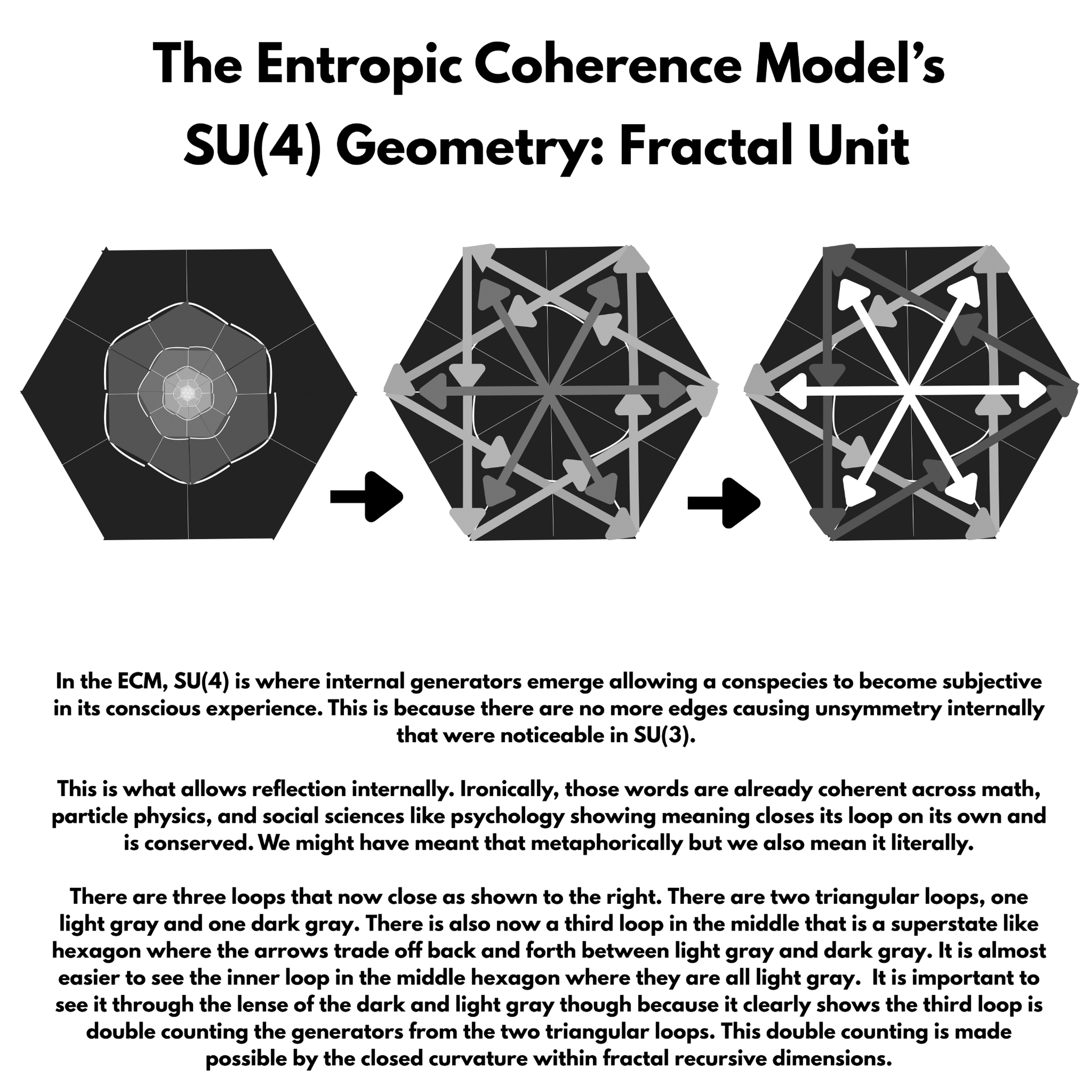
Figure 6.8
The geometrical boundaries of closed curvature, showing how closure becomes a boundary condition that is only obvious when you view the full tiling rather than one local wedge. This diagram is doing two jobs at once. Locally, inside one wedge,

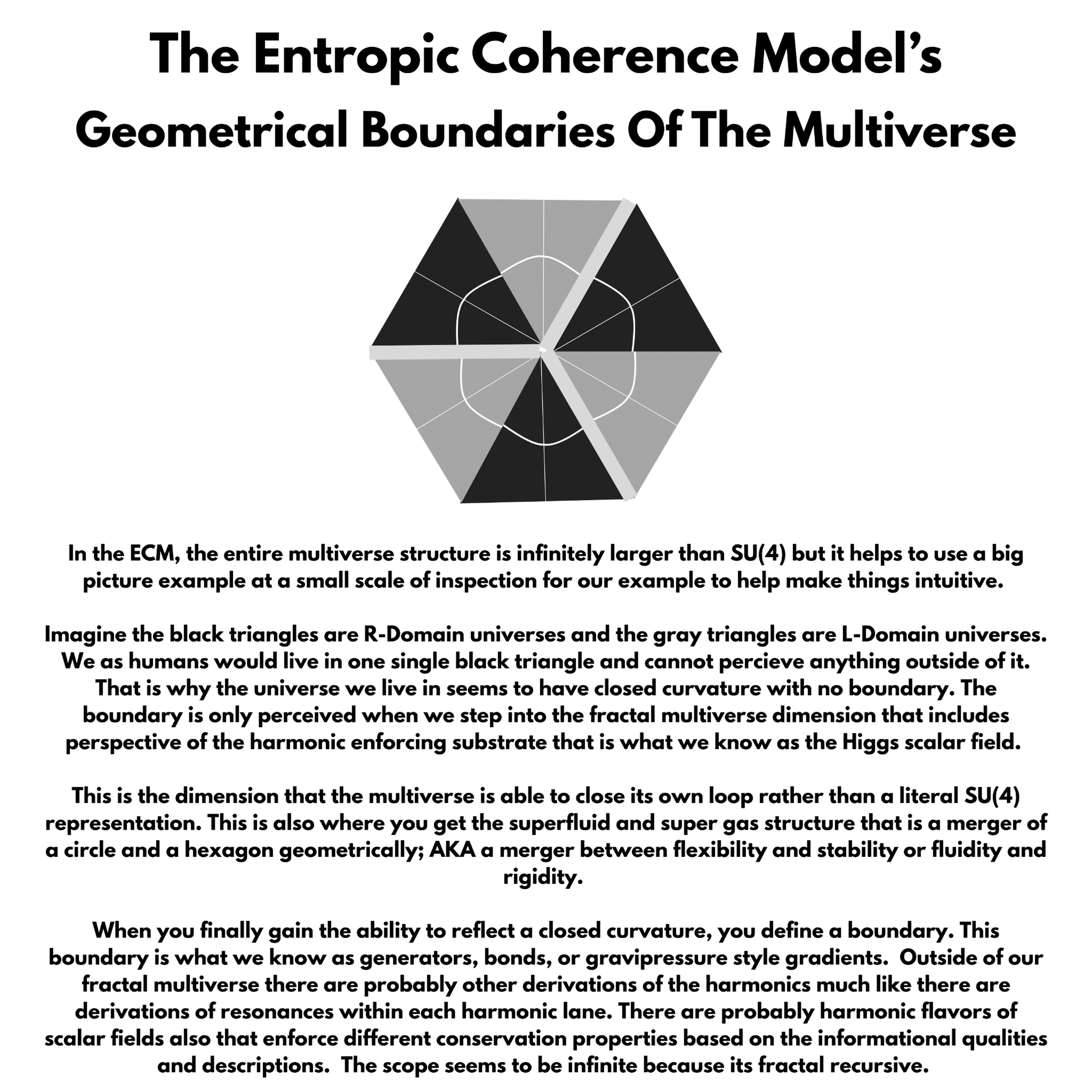
Figure 6.9
The morphographetic lattice, showing how curvature gradients become preferred generator channels across a tiling, analogous to filamentary routing in large scale structure. Once recursion exists, the next question is how energy and information


Figure 6.10
Geometry of quantum wave collapse, contrasting SU(3) wave distribution with SU(4) interference selection as internal looping becomes available. In SU(3) geometry the output behaves like a wave distribution because

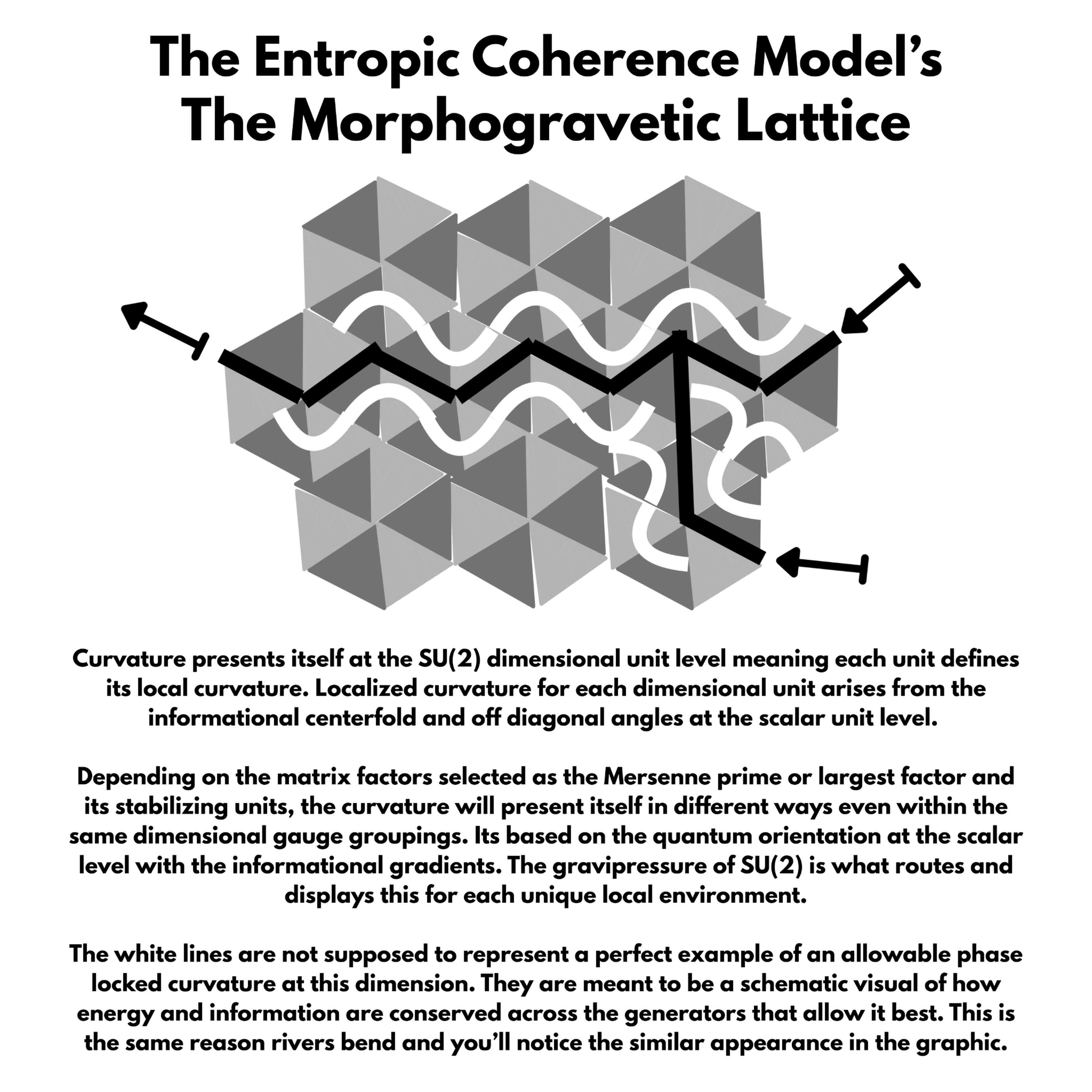
Figure 6.11
Scalar spin visualized, showing how discrete rotation and invo- lution bookkeeping build the ladder that later becomes recursion, prefractal nesting, and finally closed curvature. This figure is the compact bookkeeping version of the ladder. The discrete

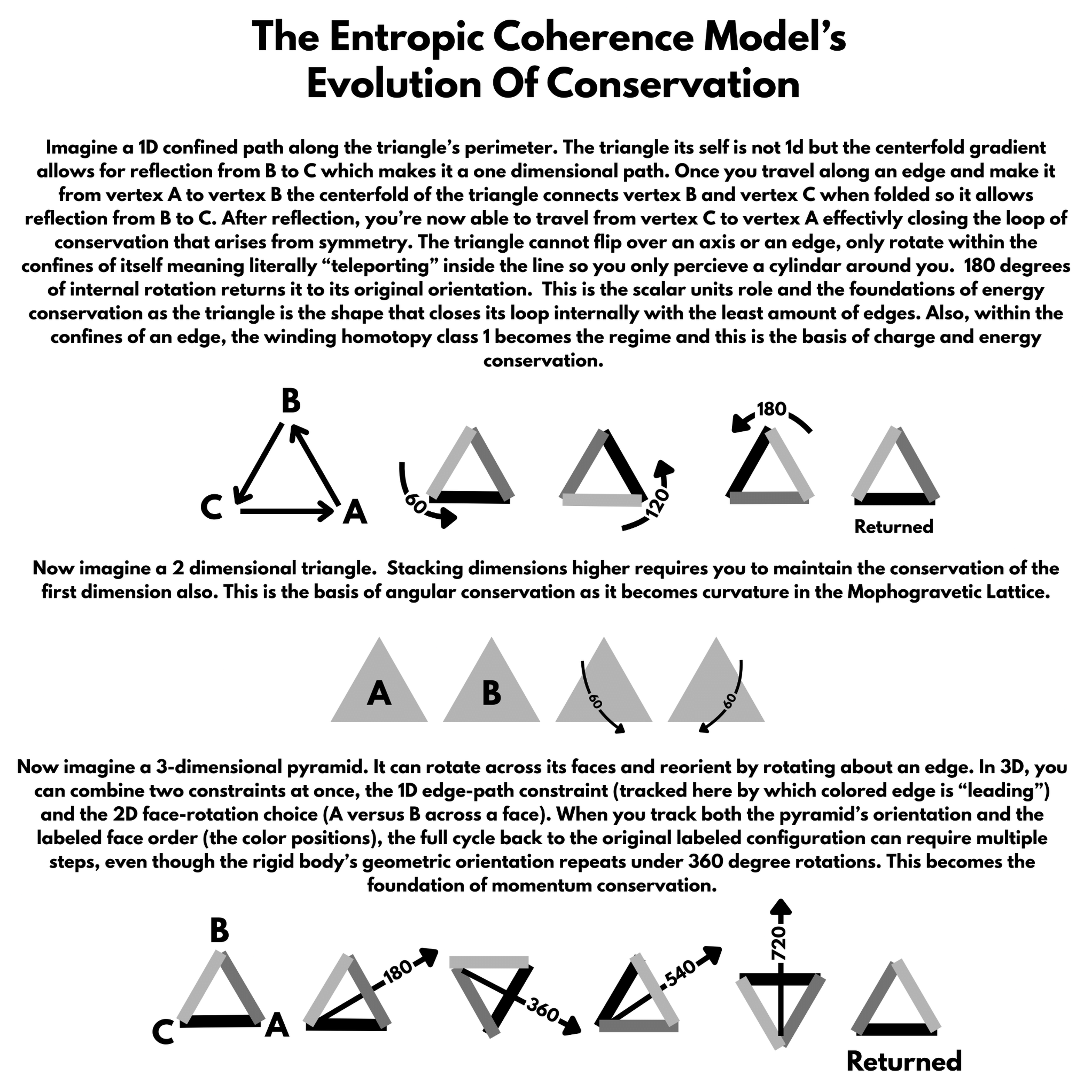
Figure 6.12
Shapes versus lines, showing why straight transport is the cheapest path until pressure forces a shape transition, after which curvature becomes the conserved routing strategy. Finally, the line versus shape distinction is the physical intuition for