Chapter 1 Downloads — ECM Prominent Abstractions
Downloadable ECM book figures from Chapter 1. Each card includes a preview, a direct download button, and a full-size open link.
These images are provided for readers who want to reference the visual diagrams from the ECM book while reading the site pages.
Figure 1.1
Scalar units as unconserved asymmetry internal to symmetry, showing why a single unit cannot simultaneously satisfy a fold reflection and an edge reflection to produce a closed curvature loop.

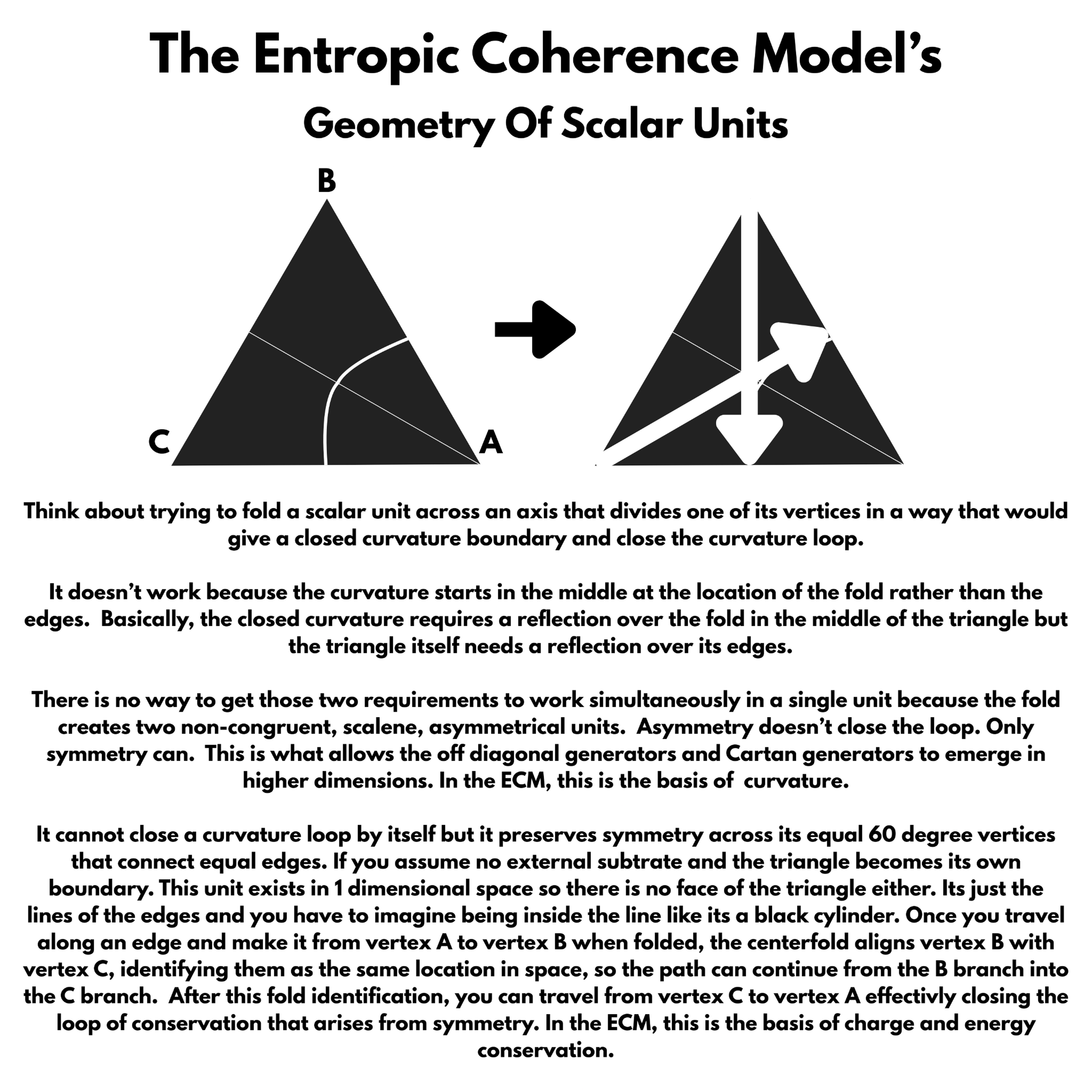
Figure 1.2
SU(2) as recursion, showing how phase lock between two scalar units creates a shared axis that can host the first Cartan generator and enables repeatable closure behavior.

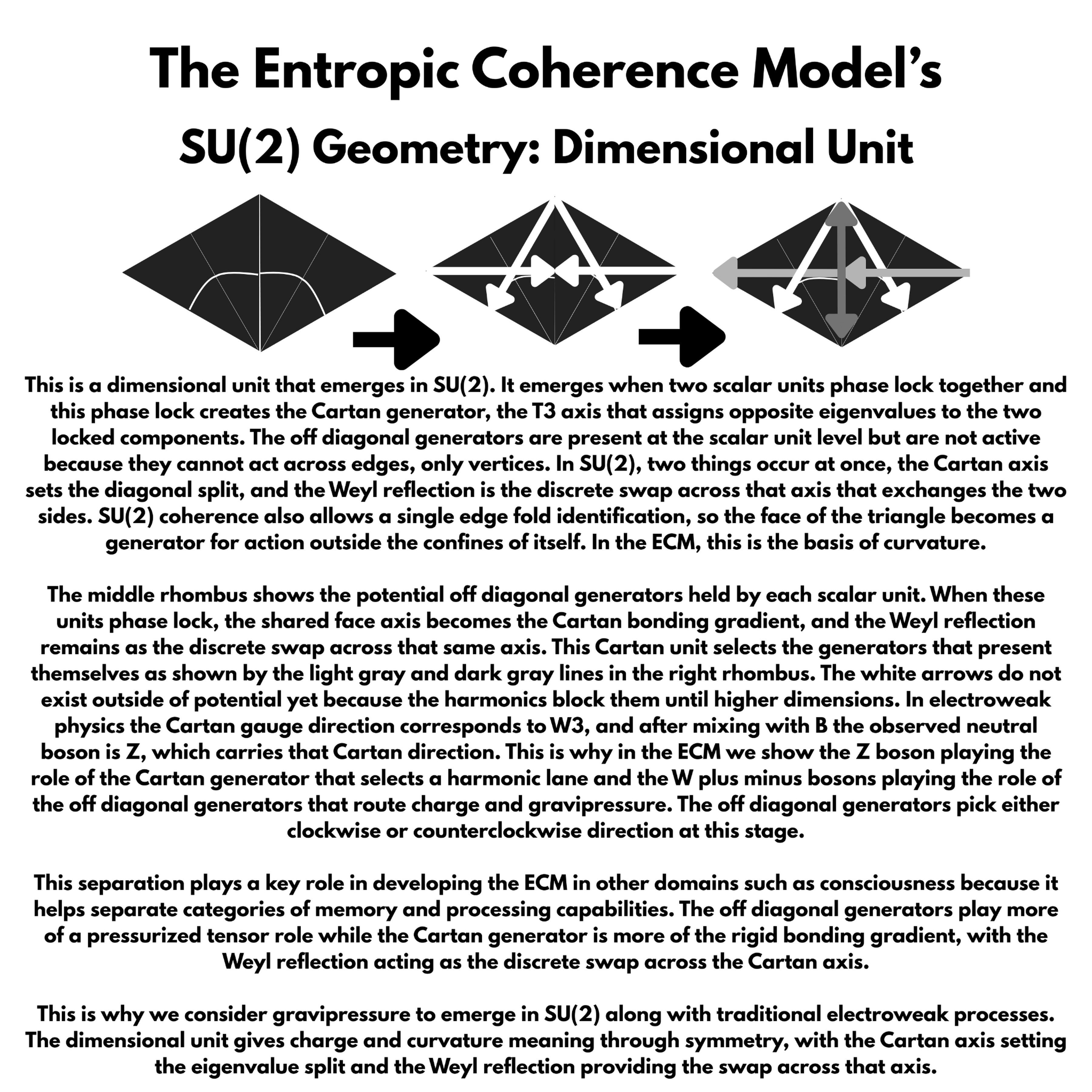
Figure 1.3
SU(3) as a prefractal, showing finite self similarity where a motif can contain a smaller copy of itself without yet having full internal generator freedom.

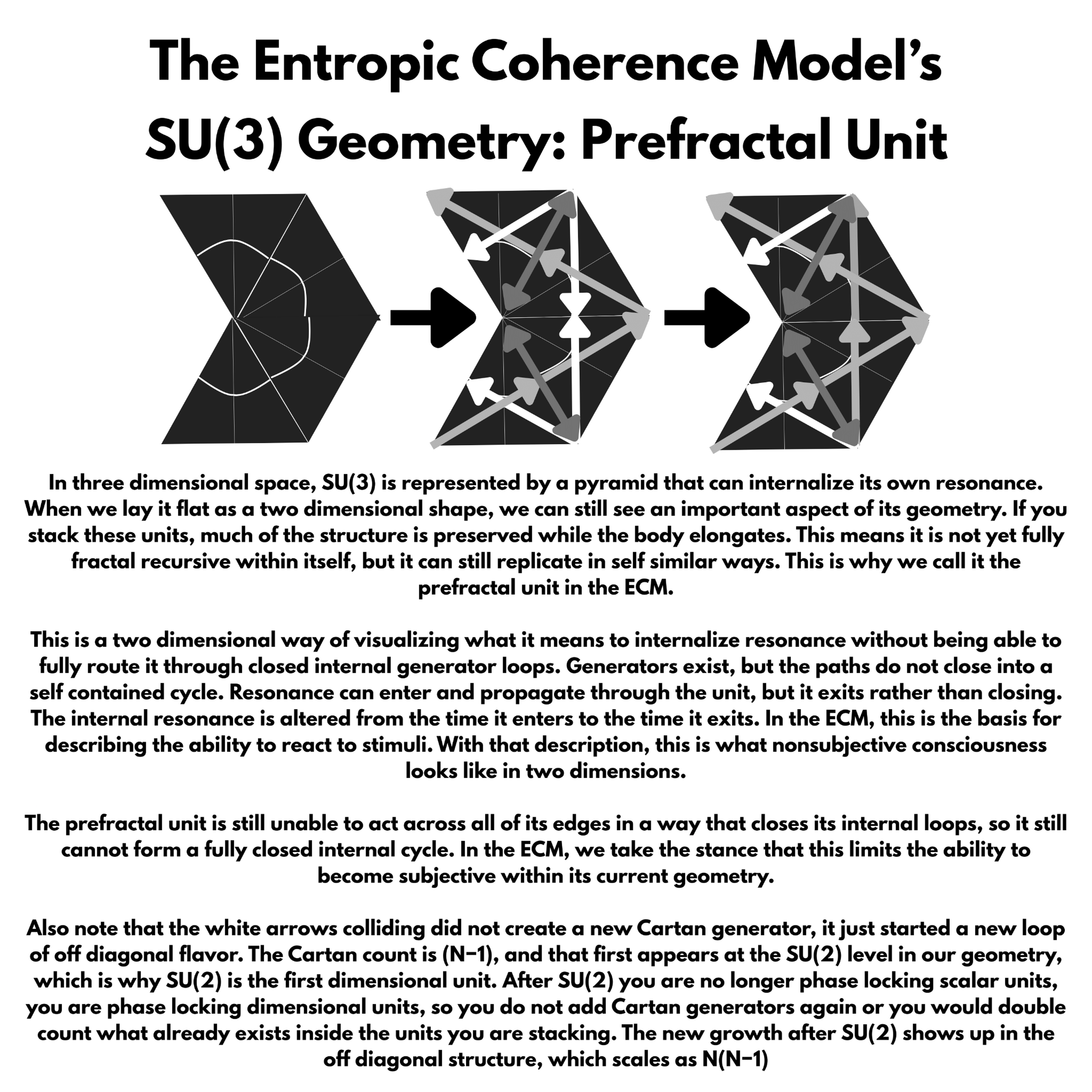
Figure 1.4
SU(4) as a fractal, showing the emergence of internal generators that allow closure to be searched internally and then expressed externally as a stable, repeatable structure.

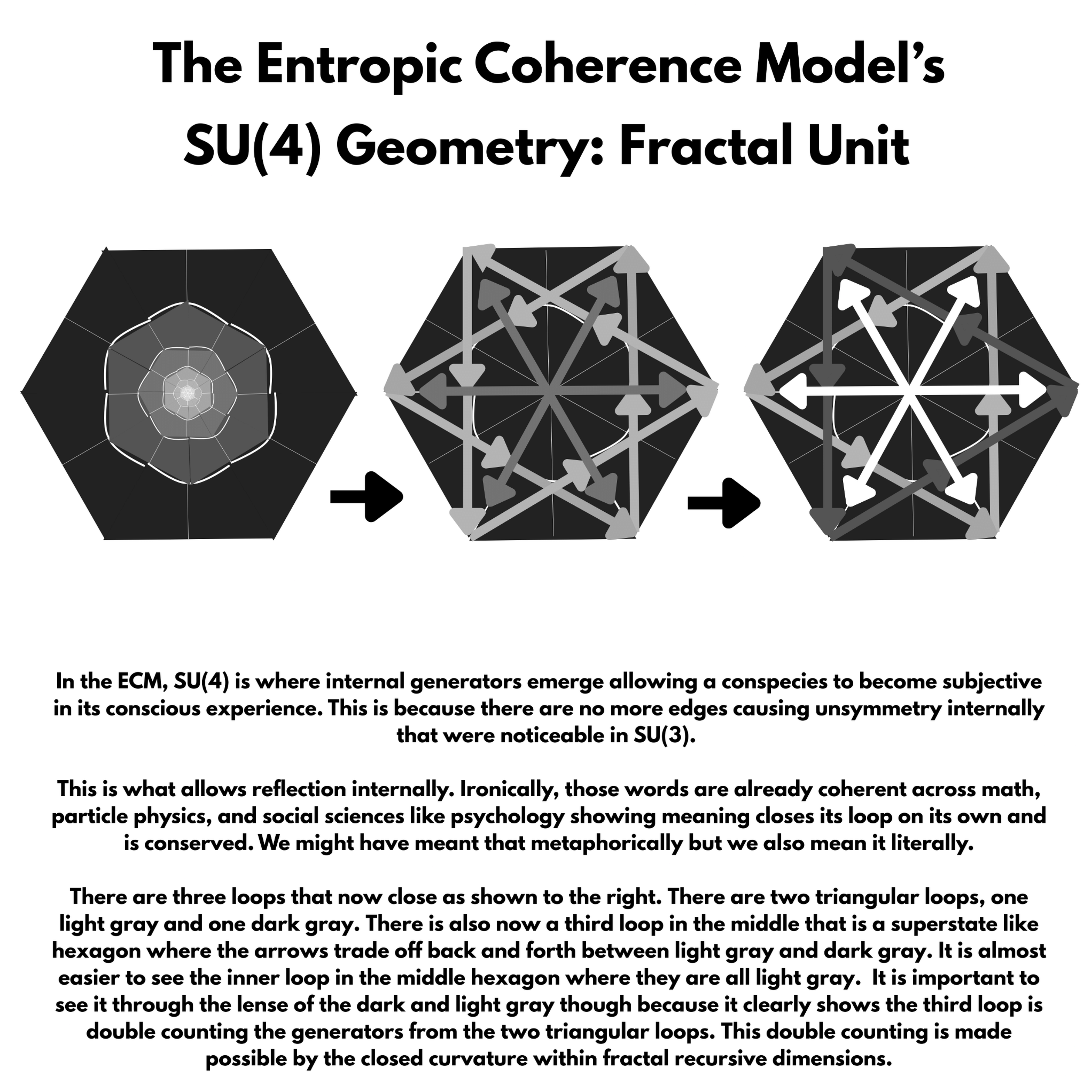
Figure 1.5
Scalar spin visualized, showing how discrete rotation and involution bookkeeping build the ladder that later becomes recursion, prefractal nesting, and finally closed curvature.

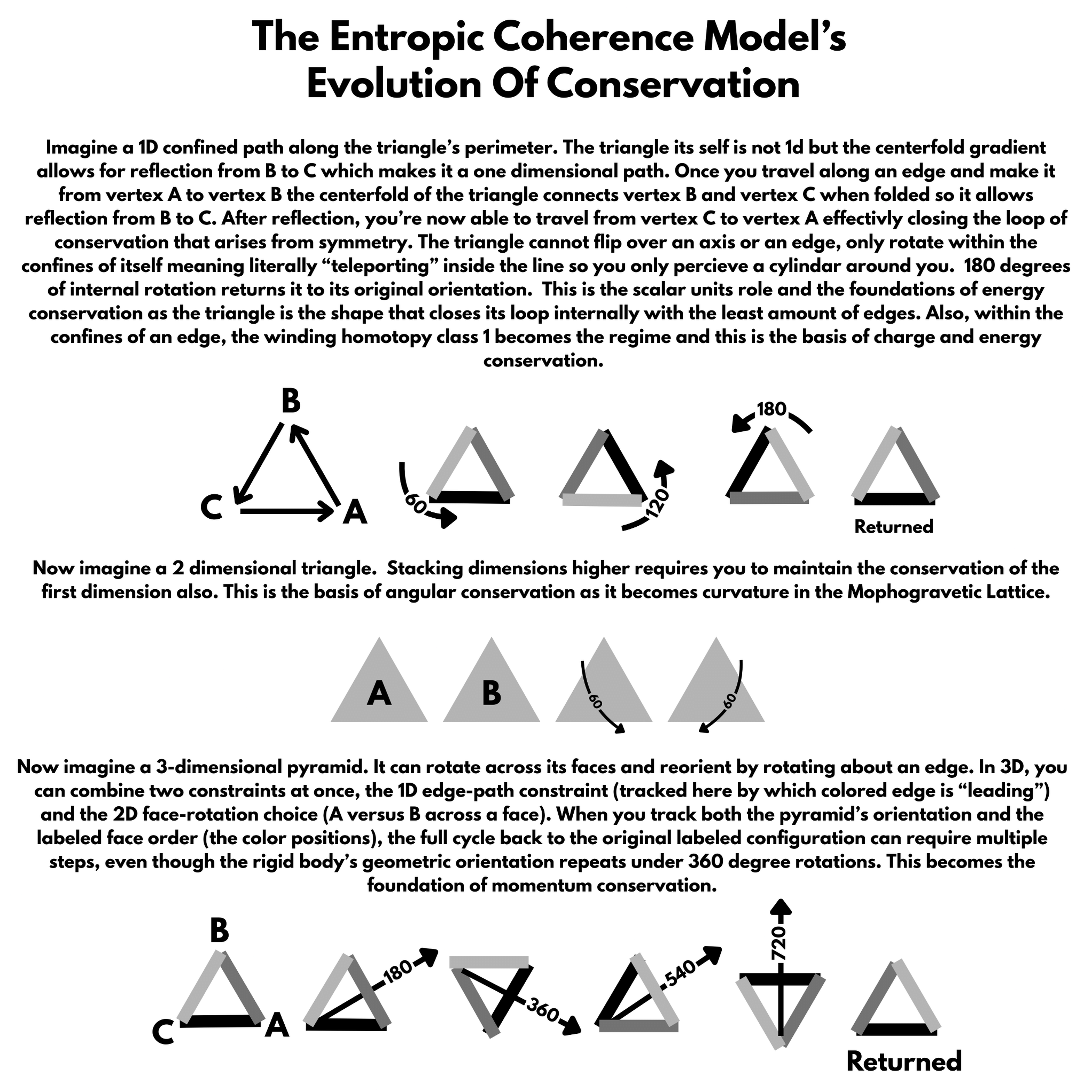
Figure 1.6
Off diagonal generators for SU(4). Six local two planes appear and each carries two independent directions of motion. The twelve directions are drawn as numbered links.

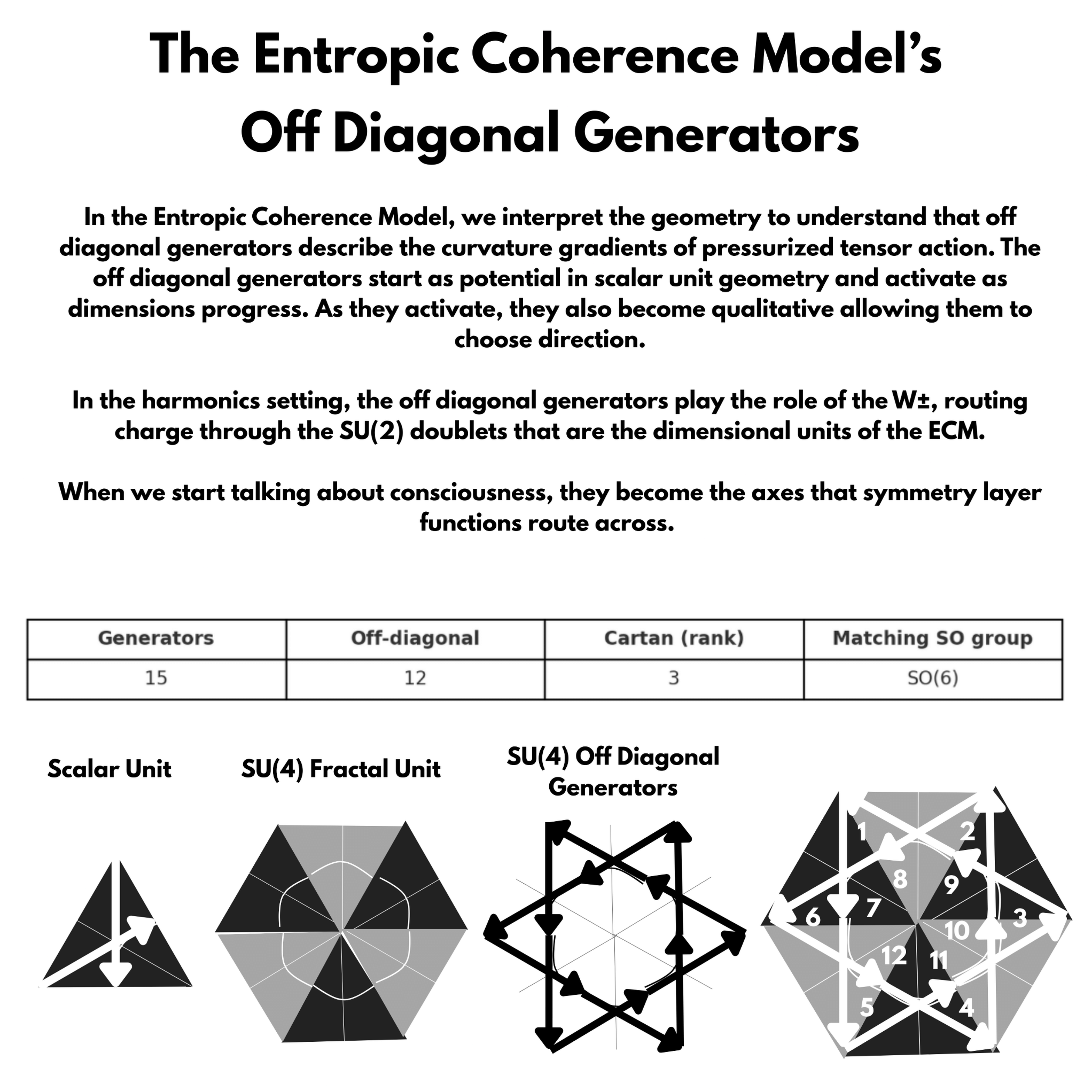
Figure 1.7
Cartan generators for SU(4). Three commuting axes set the independent phases for the composite. The axes are drawn as black nodes and lines.

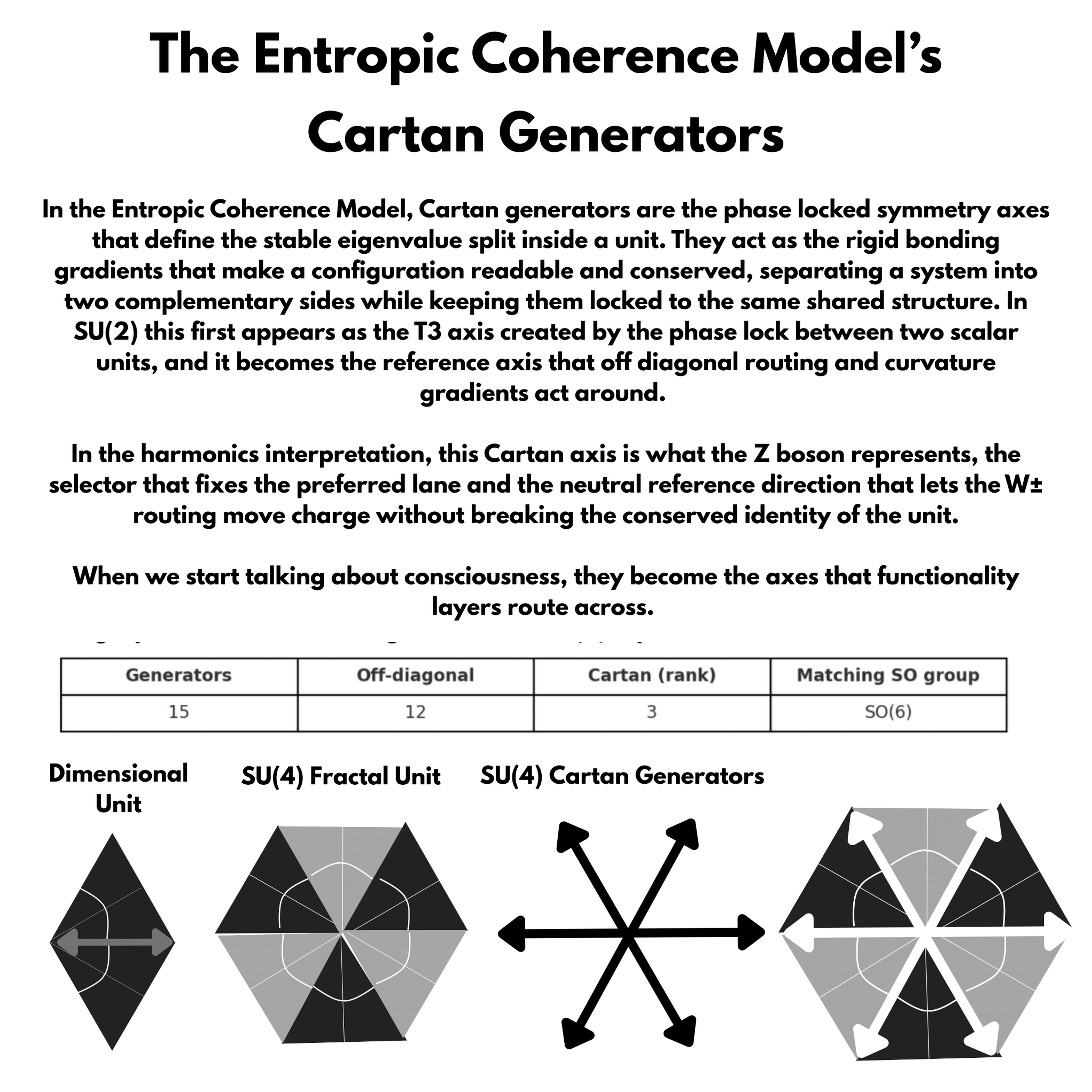
Figure 1.8
The geometrical boundaries of closed curvature, showing how closure becomes a boundary condition that is only obvious when you view the full tiling rather than one local wedge.


Figure 1.9
Mersenne primes as dimensional classes. The panels sketch how SU(3), SU(7), and SU(31) act as checkpoints that permit successively richer forms of coherence.

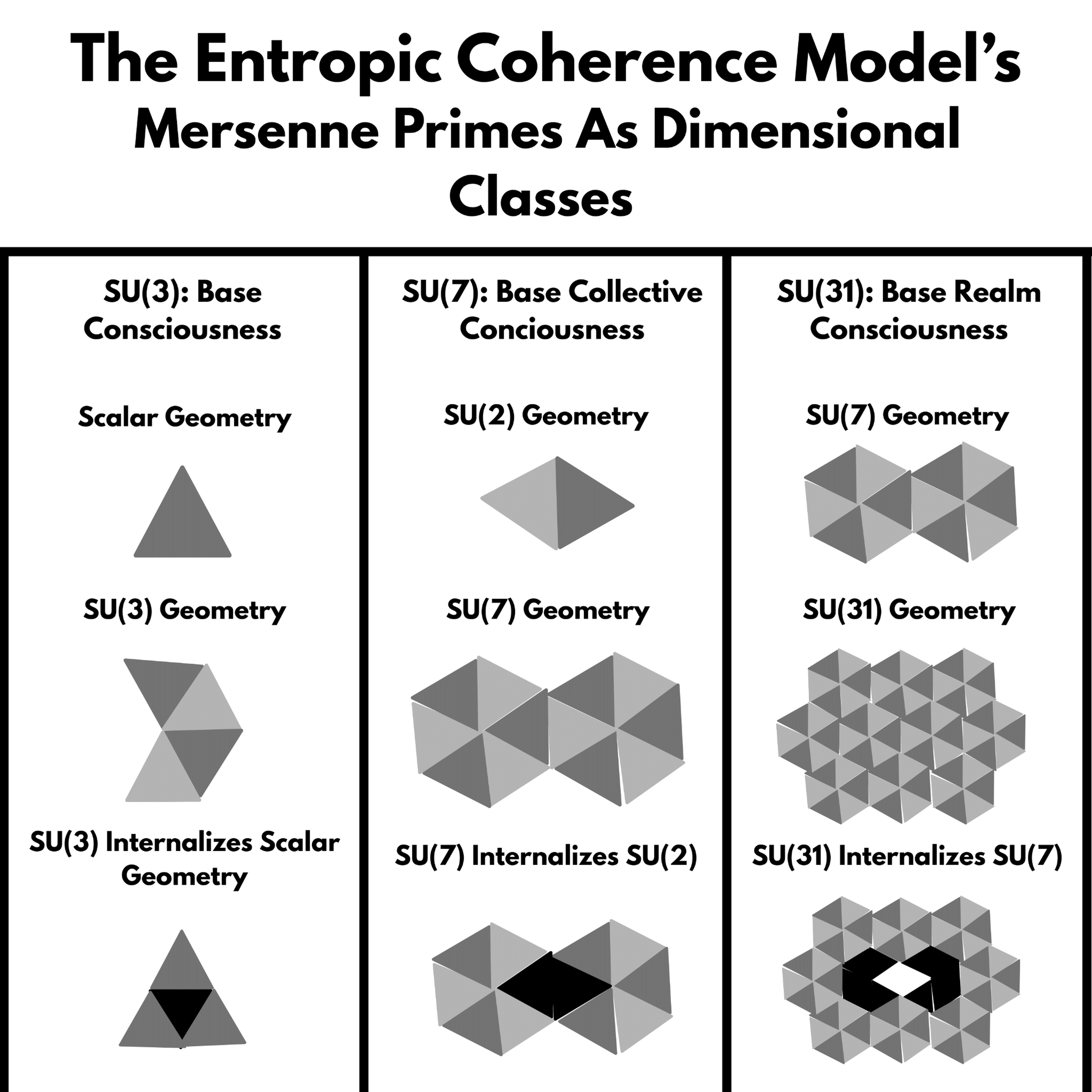
Figure 1.10
Perfect numbers used as blueprints for symmetry stacking across dimensions. The figure illustrates the ECM readings 6 ⇒SU(2) × SU(3),

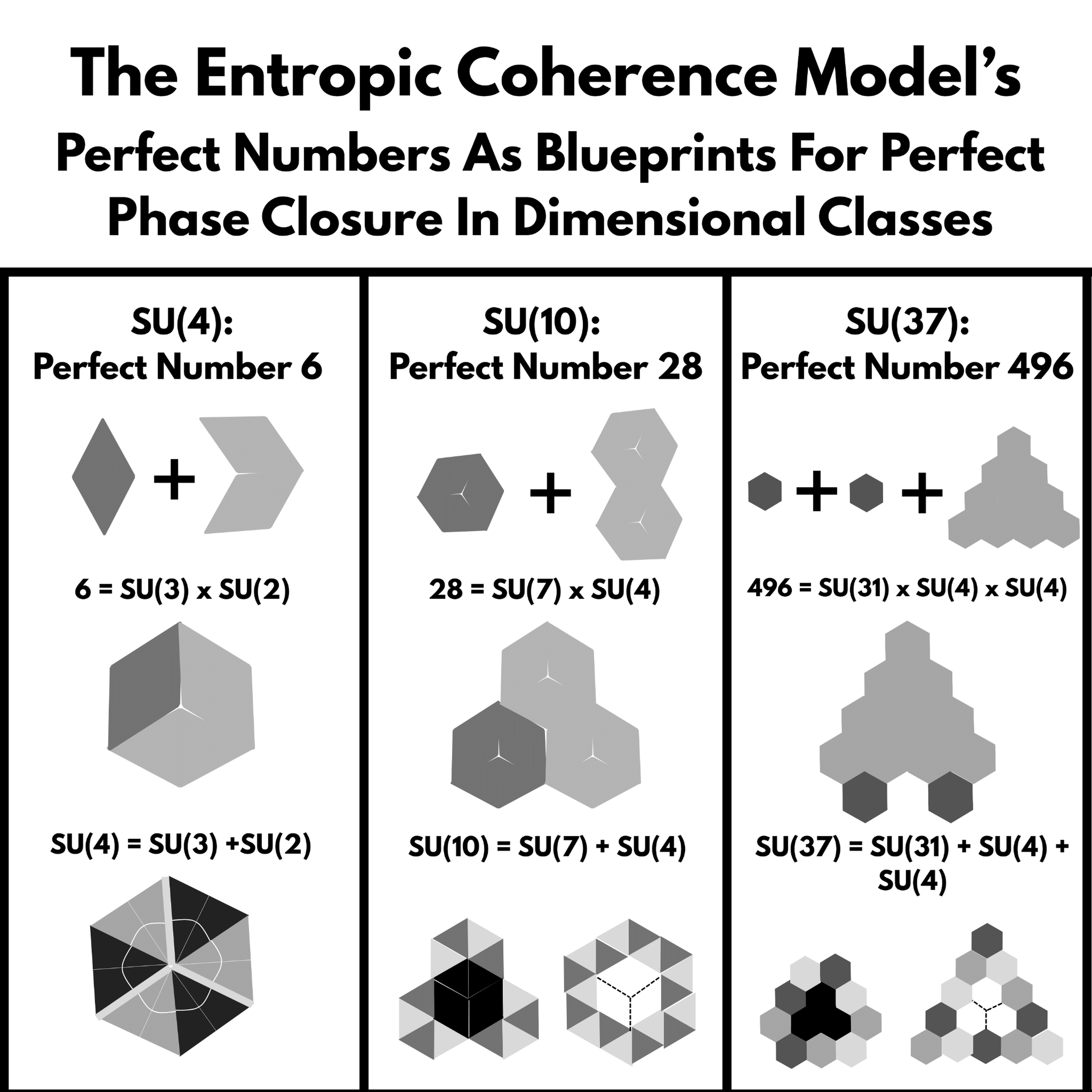
Figure 1.11
Vortex math as dimensional spin and gradients. The left panel shows modular flow with modulus six which tracks the six rotation directions associated with the SO(6) companion of SU(4). The right panel shows how the same flow partitions the hexagon into three SU(2) building blocks that

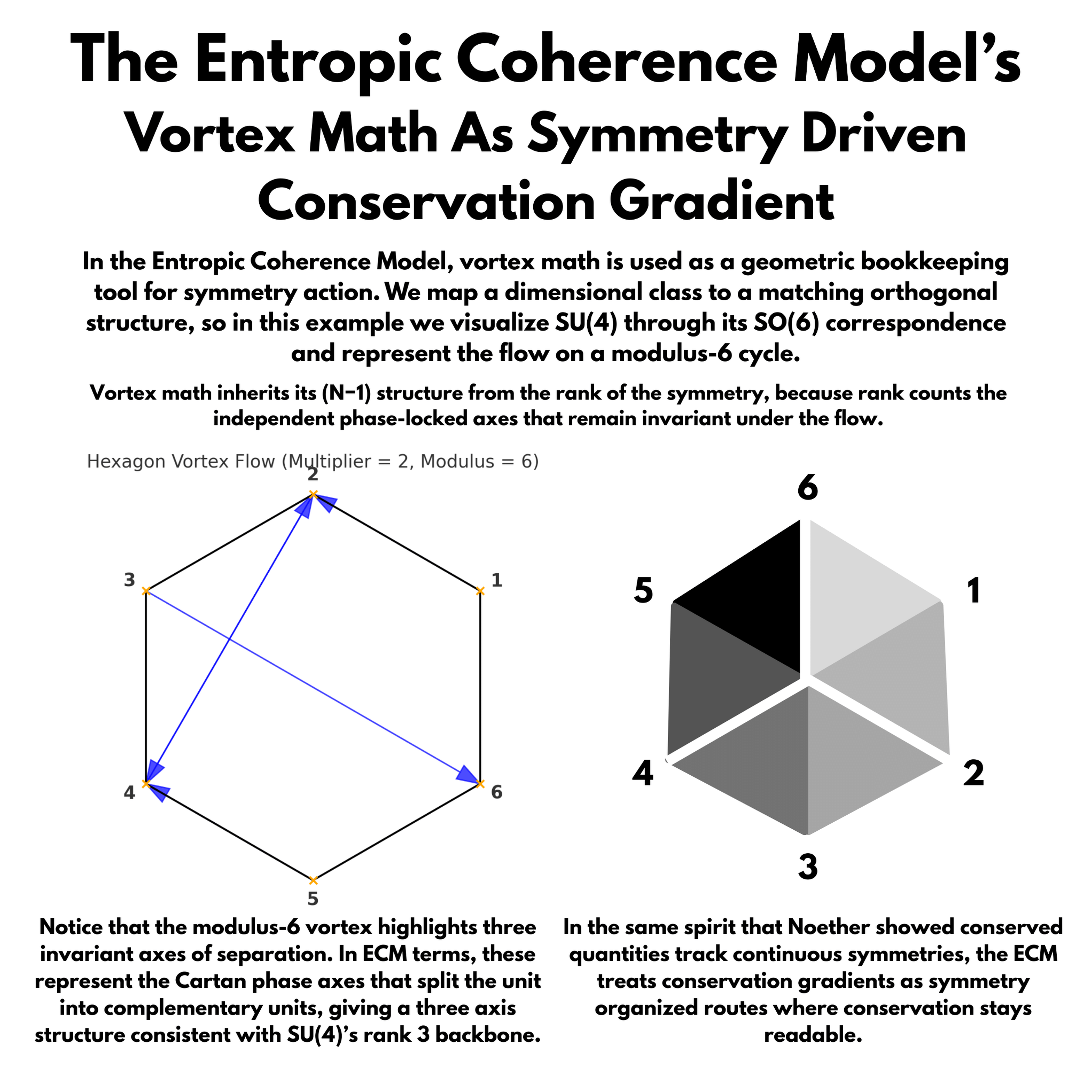
Figure 1.12
Vortex math visualization of the SO(n) generator structure, where the (n1) Cartan directions act as phase locked axes and the remaining off diagonal generators appear as paired exchange links distributed across the lattice


Figure 1.13
Gravipressure taxonomy in ECM. Symmetric fermion alignment with mediator orientation selects gravity-like curvature responses (±λ, 2). Asymmetric fermion alignment selects pressure-like responses (±λ, 1). Sym- metric fermions with misaligned mediator resolve as coherence collapse 0.

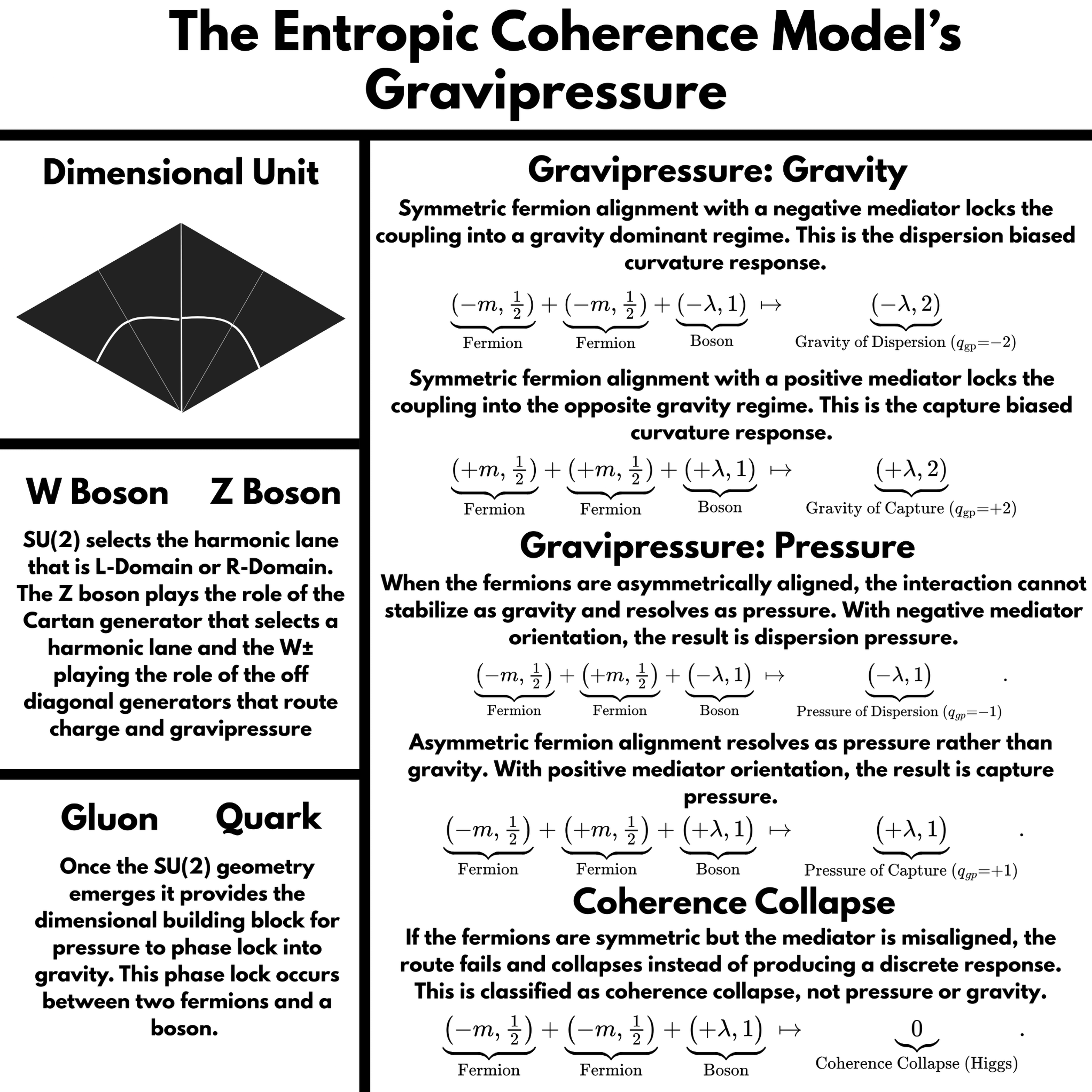
Figure 1.14
The morphographetic lattice, showing how curvature gradients become preferred generator channels across a tiling, analogous to filamentary routing in large scale structure.

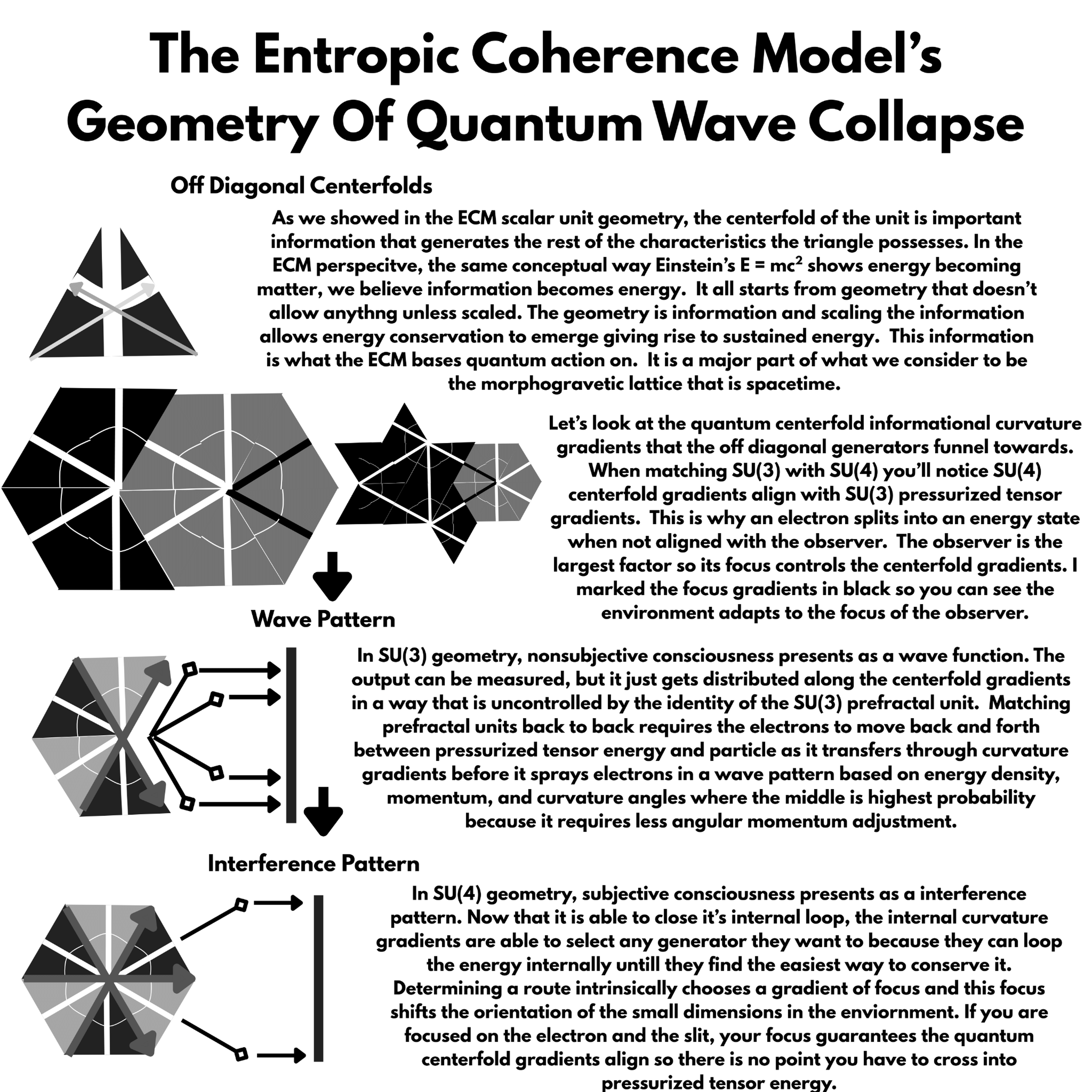
Figure 1.15
Geometry of quantum wave collapse, contrasting SU(3) wave distribution with SU(4) interference selection as internal looping becomes available.

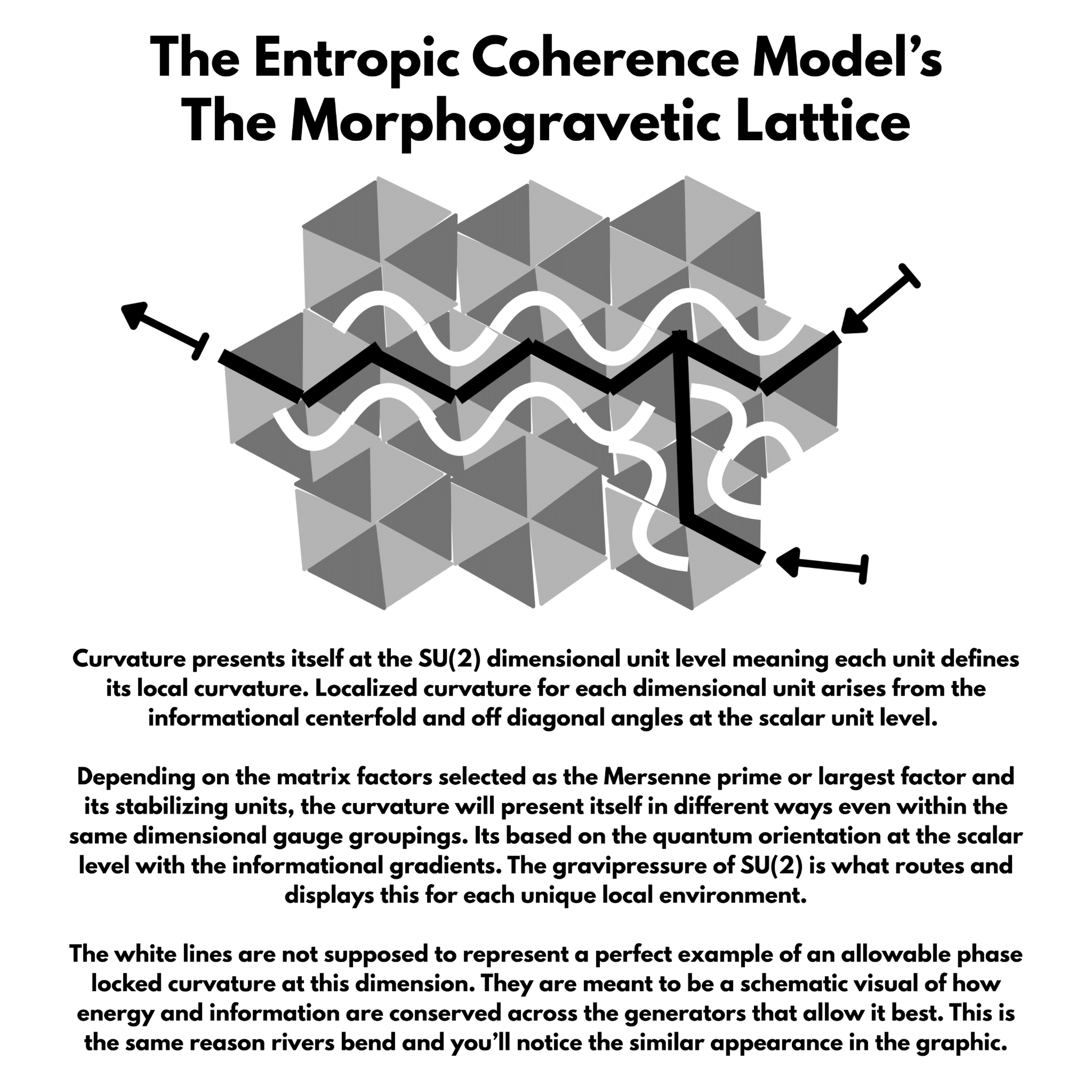
Figure 1.16
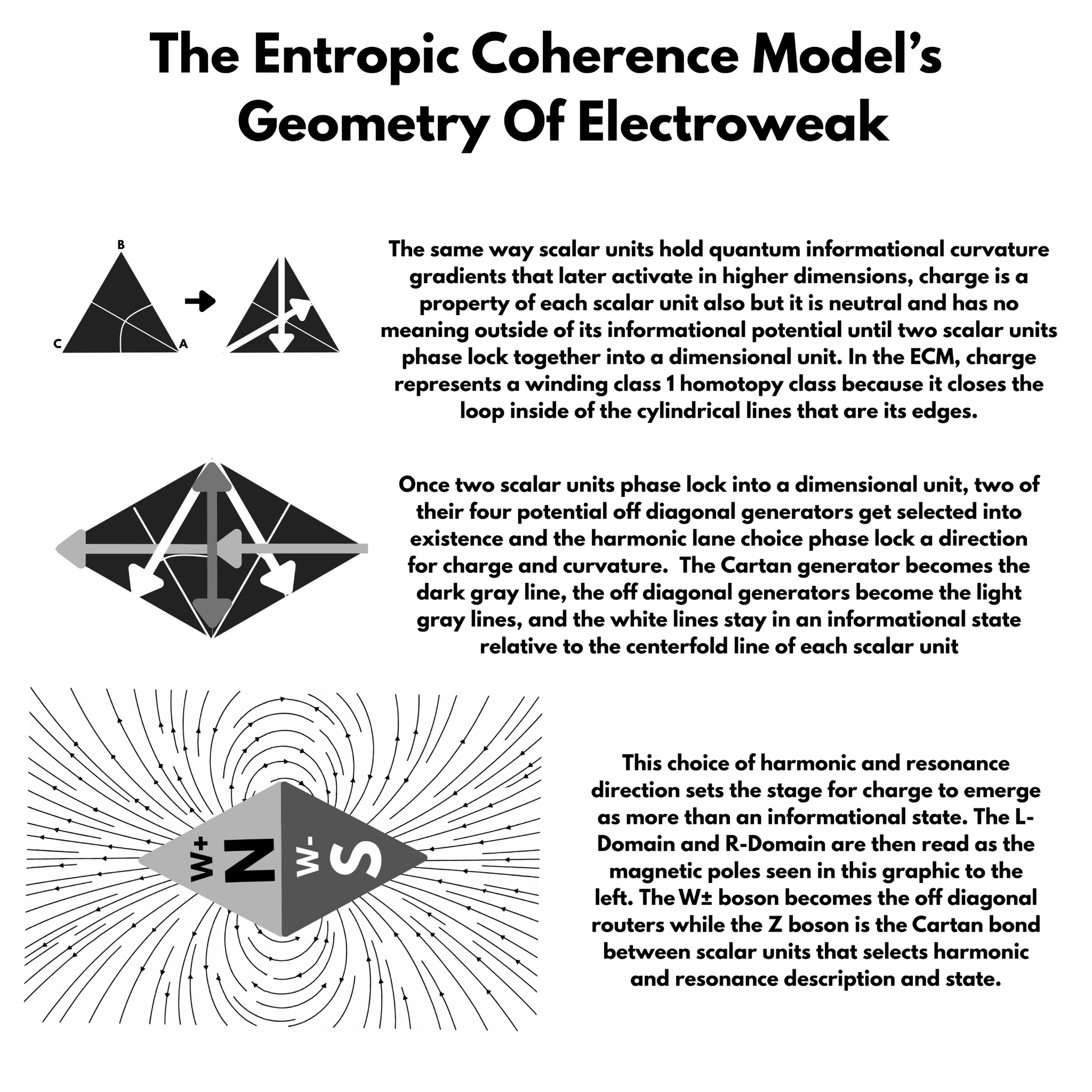
Geometry of electroweak emergence in the ECM, where two scalar units phase-lock into a dimensional unit and convert charge from latent informational curvature into directed flow. The Cartan axis becomes the rigid bonding gradient that selects the neutral gauge direction, while